
WebMCP is an experimental browser API that lets a website expose structured tools to AI agents through document.modelContext. Instead of reverse-engineering a page from pixels, DOM structure, and click targets, an agent can discover named actions with typed inputs and invoke them through the browser.
The current specification is a Draft Community Group Report dated July 21, 2026. That status matters: WebMCP is a serious proposal with a Chrome origin trial, but it is not a finished W3C standard or a stable cross-browser feature.
The Problem WebMCP Tries to Solve
A human can look at a search form, infer what it does, enter a query, and interpret the results. An AI agent has to reconstruct the same interaction from markup, accessibility data, screenshots, or browser automation. That reconstruction is brittle. A changed label, hidden control, or asynchronous state transition can break the flow.
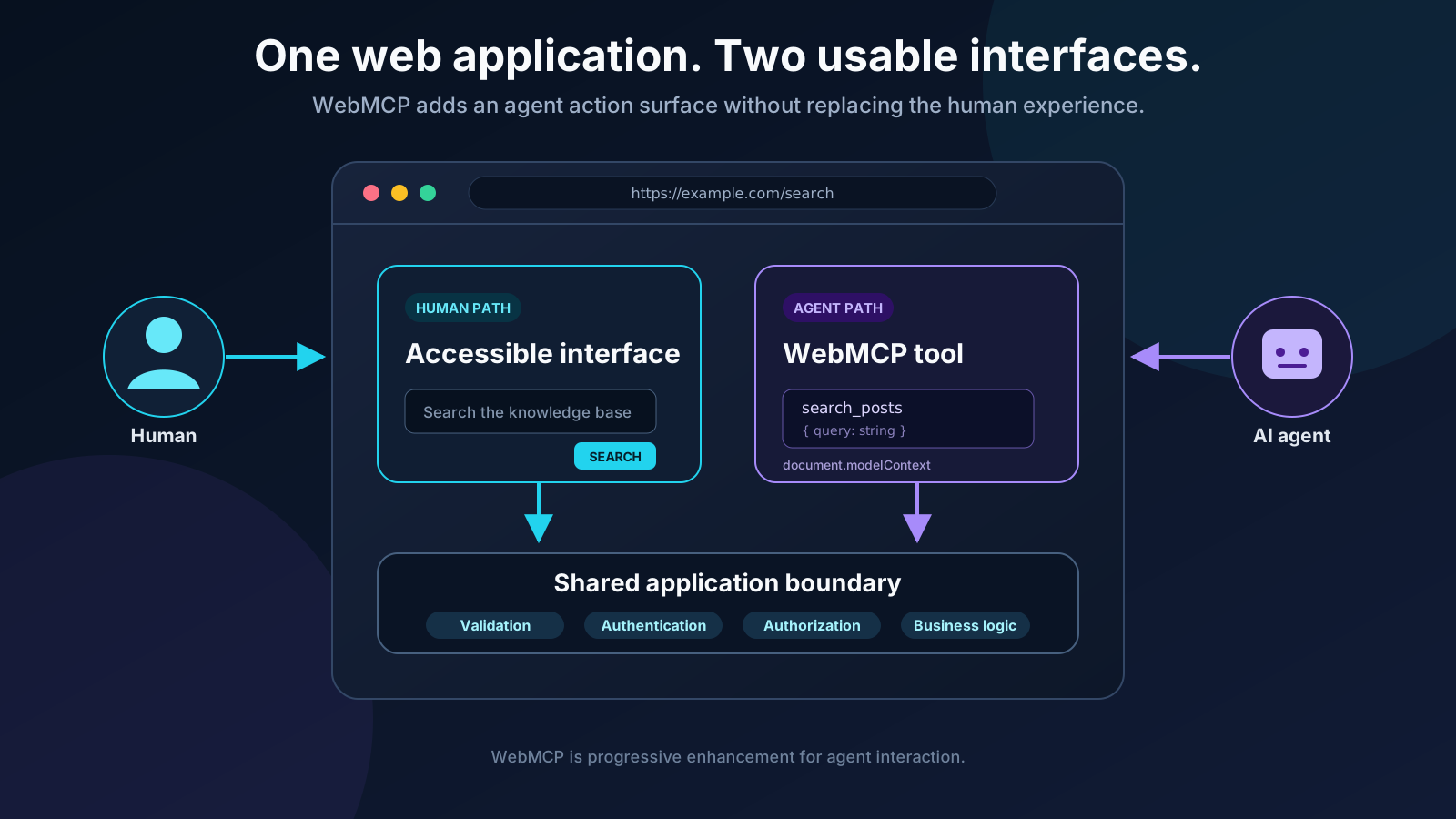
WebMCP gives the page a second interface for the same capability:
- The human gets the normal visual interface.
- The agent gets a named tool, a description, a JSON Schema input contract, and a structured result.
- The website keeps its existing validation, authentication, and business logic.
This is progressive enhancement for agent interaction. The visual page remains the product; WebMCP adds a browser-mediated action surface.
How the Imperative API Works
The imperative API registers a JavaScript tool on document.modelContext:
if (document.modelContext) {
  const controller = new AbortController();

  await document.modelContext.registerTool(
    {
      name: 'search_posts',
      title: 'Search posts',
      description: 'Search published posts by keyword and return up to five matches.',
      inputSchema: {
        type: 'object',
        properties: {
          query: {
            type: 'string',
            description: 'The topic or phrase to search for.'
          }
        },
        required: ['query']
      },
      annotations: {
        readOnlyHint: true,
        untrustedContentHint: false
      },
      async execute({ query }) {
        return JSON.stringify(searchLocalIndex(query).slice(0, 5));
      }
    },
    { signal: controller.signal }
  );

  // Abort when the tool should no longer be available.
  // controller.abort();
}
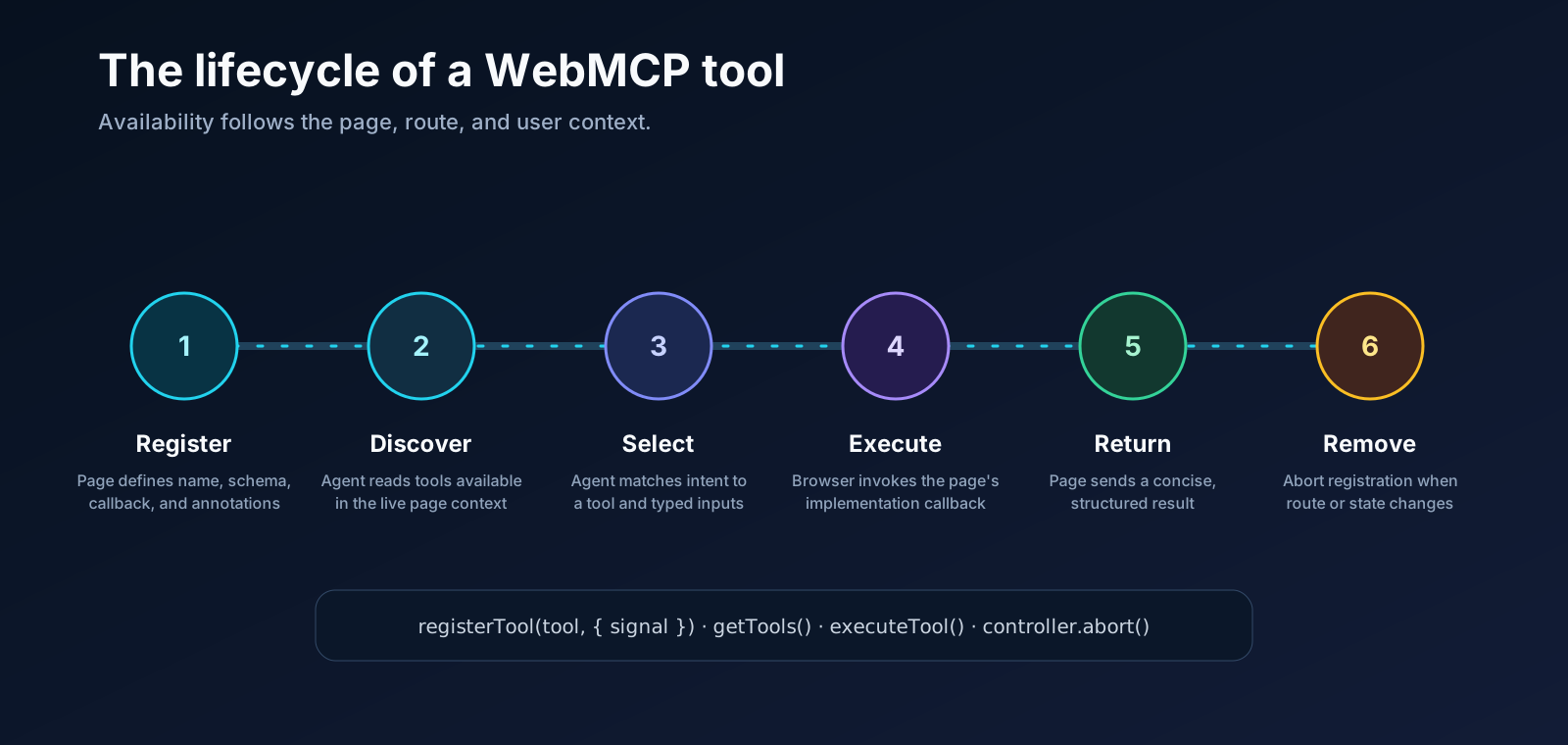
The page controls the implementation. The browser controls discovery and invocation. The current draft defines getTools() and a toolchange event for in-page discovery. Chrome’s origin-trial documentation also exposes executeTool() so an in-page agent can invoke a discovered tool.
Registration is dynamic. Passing an AbortSignal lets the page remove a tool when its route, state, or component changes. That is safer than leaving an action registered after the corresponding interface has disappeared.
Cross-origin access is closed by default. A page must explicitly expose a tool to secure origins with the exposedTo registration option, and a caller must request tools from those origins. Cross-origin iframes also require the tools Permissions Policy.
The Declarative API Turns Forms Into Tools
Chrome’s origin-trial documentation also defines a declarative path for HTML forms:
<form
  toolname="createSupportRequest"
  tooldescription="Submit a customer support request."
>
  <label for="issue">What went wrong?</label>
  <textarea
    id="issue"
    name="issue"
    required
    toolparamdescription="A concise description of the support issue."
  ></textarea>

  <button type="submit">Send request</button>
</form>
The browser derives a tool schema from the form and its controls. When an agent invokes the tool, Chrome can focus the visible form and populate its fields, leaving the user to submit it. Developers can opt into automatic submission with toolautosubmit, handle agent-triggered submissions through SubmitEvent.agentInvoked, and return a result with respondWith().
There is an important standards nuance here. Chrome documents and demos the declarative API, but the normative declarative section in the July 21 Draft Community Group Report is still marked TODO. Implementation availability and specification completeness are not the same thing.
Try the interactive progressive-enhancement demo. Its accessible search form works in every modern browser, while its agent panel exposes the equivalent tool contract and simulates an invocation when the native API is unavailable.
Annotations Are Hints, Not Security Controls
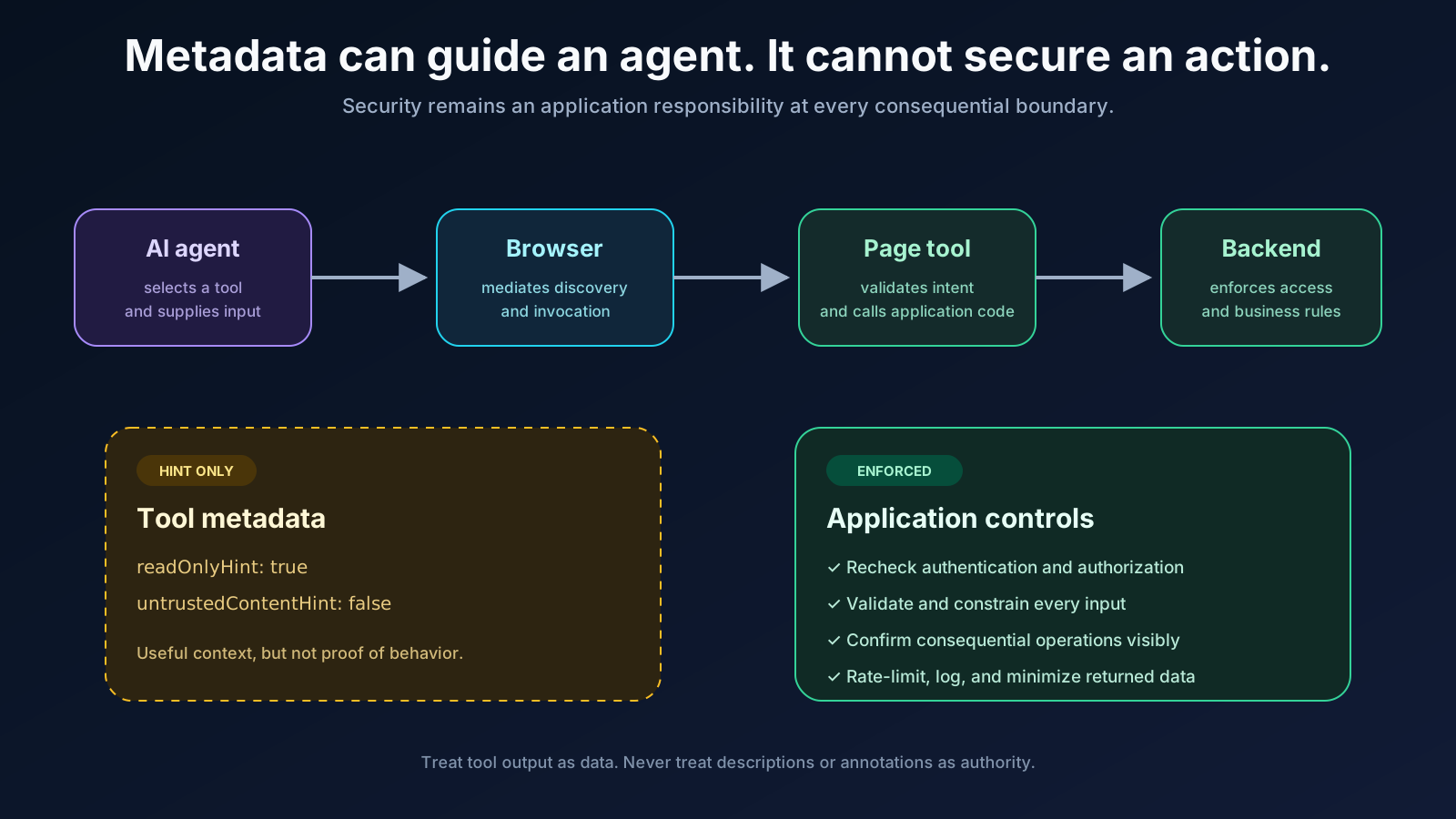
readOnlyHint and untrustedContentHint help an agent reason about a tool:
readOnlyHint: truesays the tool is intended not to change state.untrustedContentHint: truesays the output may contain user-generated or externally sourced content.
Neither field is enforced proof. A dishonest or buggy tool can claim to be read-only while changing data. A supposedly trusted output can still contain malicious instructions. The current specification explicitly identifies prompt injection, tool poisoning, output injection, intent misrepresentation, and privacy leakage as threat classes.
The right boundary is ordinary application security:
- Recheck authorization inside the operation.
- Validate inputs in code instead of trusting the schema alone.
- Keep tools narrow and expose the minimum data required.
- Require visible user review or confirmation for consequential actions.
- Treat authenticated read access as sensitive, even when it does not mutate data.
- Mark external and user-generated output as untrusted.
- Keep tool names, descriptions, parameters, and outputs concise.
WebMCP can execute within the user’s active browsing context. That is its main advantage and its main risk. Existing session state removes the need to create a second authentication system, but it does not grant an agent broader authority than the user should have in that moment.
What WebMCP Is Not
WebMCP is easy to confuse with adjacent agent infrastructure. Four boundaries keep the concept precise:
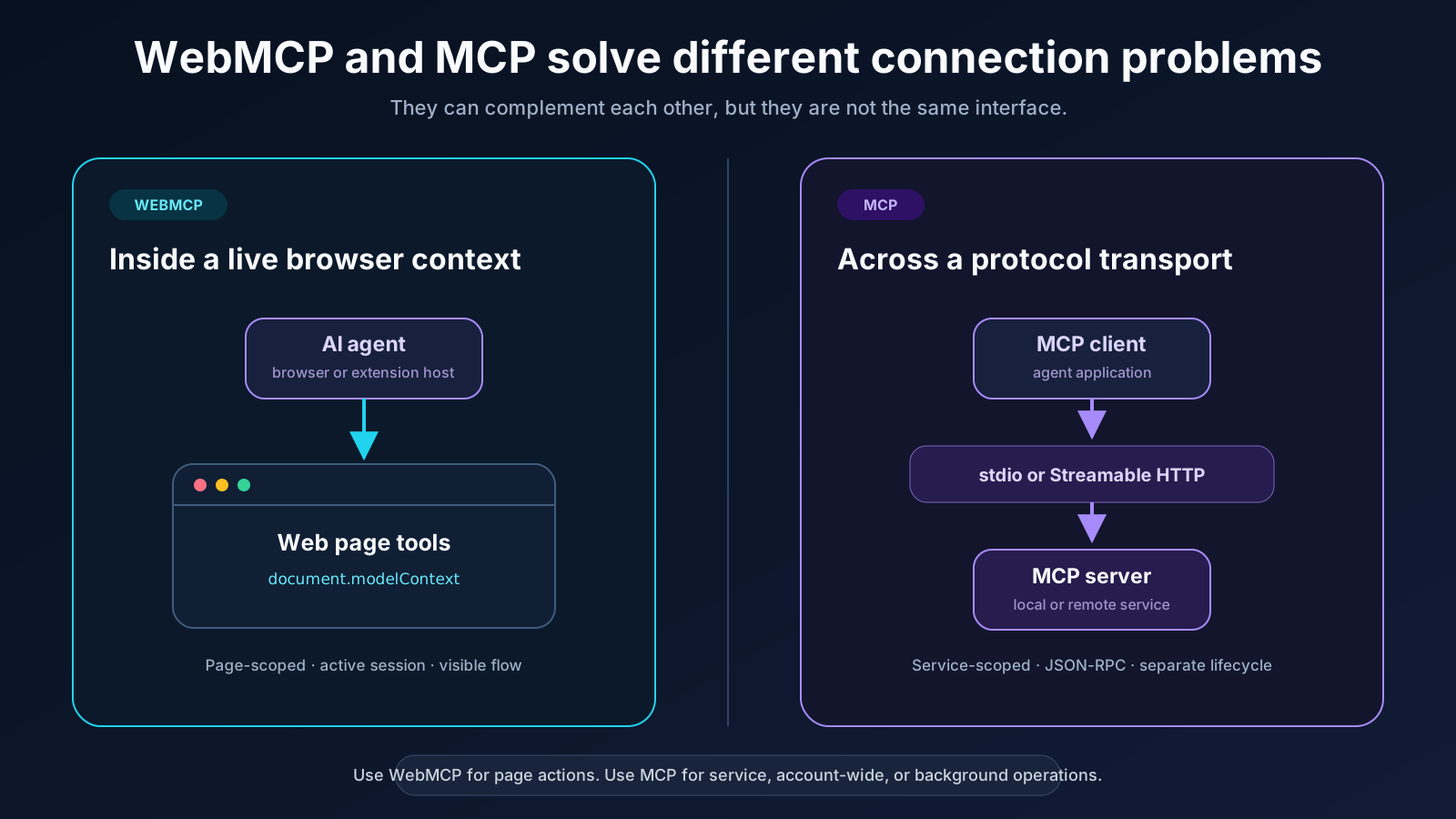
- It is not an MCP server. WebMCP is a browser API. MCP is a JSON-RPC protocol with stdio and Streamable HTTP transports.
- It is not a static discovery manifest. The current proposal discovers tools from a live browsing context.
/.well-known/webmcpis not defined by the draft. - It is not a headless website API. The browser must visit the page for its tools to become available.
- It is not a safety layer. Tool metadata helps an agent choose, but the website still owns authorization, validation, consent, and error handling.
A product can use WebMCP and MCP together. For example, the browser surface can expose actions tied to the current page while an MCP server exposes account-wide or background operations. They are complementary interfaces with different lifecycles and trust boundaries.
WebMCP vs. MCP
| WebMCP | Model Context Protocol | |
|---|---|---|
| Interface | Browser API on document.modelContext | JSON-RPC protocol |
| Runtime | A live page and browsing context | A separate local or remote server |
| Discovery | The client visits a page and reads available tools | The client connects to a configured server |
| Transport | Browser-mediated, no separate protocol transport required | stdio or Streamable HTTP |
| Authentication | Uses the web application’s active session and controls | The server defines its authentication model |
| Best fit | Page-scoped actions and visible user flows | Background, account-wide, local, or service-level tools |
The API name is another useful date marker. Early previews and polyfills used navigator.modelContext. The current draft defines document.modelContext, and Chrome says the navigator surface is deprecated in Chrome 150. Tutorials using the older name target an earlier implementation.
What I Learned Implementing WebMCP on chudi.dev
My first chudi.dev implementation used the @mcp-b/global polyfill and its navigator.modelContext surface. It registered three read-only tools for searching posts, listing posts, and returning author context. I also added a separate /.well-known/webmcp manifest backed by HTTP routes.
That experiment exposed a distinction my original article blurred: the browser tools and the HTTP manifest are two independent action surfaces. The former follows an early WebMCP implementation. The latter is custom server-side discovery. Calling both “WebMCP” makes the architecture sound more standardized than it is.
It also showed why version labels belong beside experimental code. The older WebMCP + SvelteKit implementation guide is evidence of a working polyfill integration, not evidence that its exact API matches the July 21 draft. A current implementation should use a compatibility adapter or migrate to document.modelContext, then test both the enhanced path and the normal site with WebMCP unavailable.
Browser Support and Production Readiness
Chrome documents a WebMCP origin trial beginning in Chrome 149. Developers can also test locally by enabling chrome://flags/#enable-webmcp-testing and use the WebMCP Inspector extension to inspect registered tools. Chrome’s current documentation says the browser must visit the website directly to discover its tools and that headless mode is not supported.
That is enough for experiments, demos, and controlled trials. It is not enough to make WebMCP a required dependency for a public product. Production code should:
- Feature-detect
document.modelContext. - Preserve the complete human workflow without WebMCP.
- Register only tools that are valid for the current page state.
- Remove stale tools with
AbortSignal. - Validate and authorize every call inside the implementation.
- Test expected tasks, incorrect tool selection, malformed input, cancellation, and sensitive-data exposure.
- Track the dated specification and Chrome implementation separately.
Why WebMCP Matters
Structured content helps an AI system understand a website. Structured tools help an agent use it. That difference matters for search, support, scheduling, account management, and commerce flows where a wrong click can cost more than a poor summary.
In Agent Commerce Readiness, I argued that machine-readable checkout infrastructure reduces the need for agents to guess through a purchase flow. WebMCP applies the same principle to general web interaction. It also extends the logic behind answer engine optimization: make meaning explicit where interpretation is expensive.
The practical stance is neither “ignore it until standardization” nor “rebuild around it now.” Use WebMCP as an optional enhancement, keep its authority narrow, test it against real tasks, and label every implementation with the browser and draft version it targets.